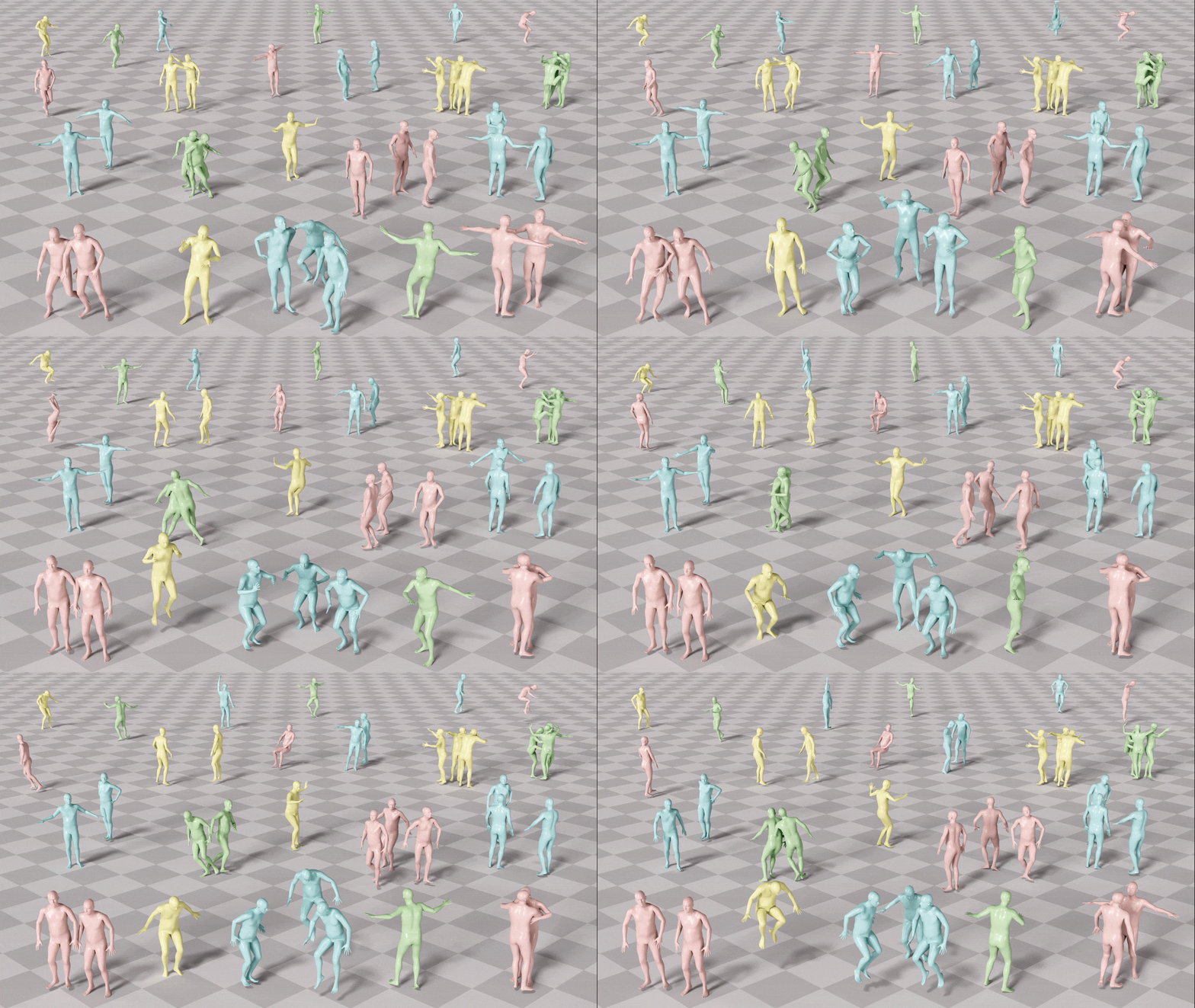
A Dataset and Evaluation for Complex 4D Markerless Human Motion Capture
HUM4D is a multi-view RGB-D dataset and evaluation benchmark developed for human mesh recovery in complex markerless motion-capture scenarios. The project focuses on challenges such as occlusion, identity switching, and close human interactions, providing synchronized data and evaluation resources for advancing 4D human reconstruction research. The paper was accepted to the CVPR 2026 Workshop on 4D World Models.
SLASHOT: AN EXPERIMENT IN GAME BALANCING
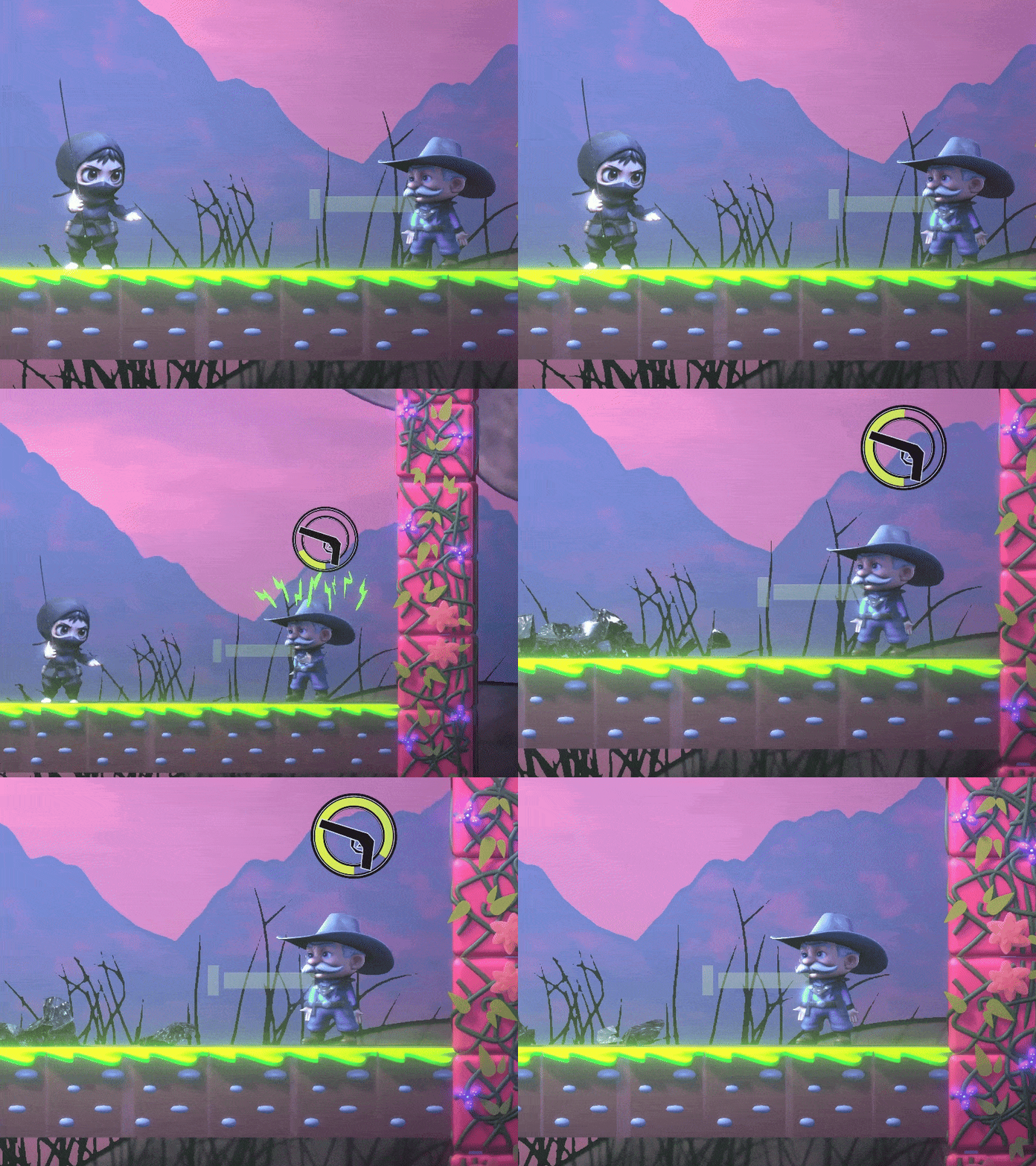
This was my final year capstone project for the MS Visualization program at Texas A&M University. I created a simple platform fighter game, with two characters with distinct playstyles and mechanics. I, then proceeded to evaluate the balance of the game using manual playtesting and furthermore created an automated simulation environment for evaluating and improving the game's balance. The simulation environment featured AI-driven versions of these characters which incorporated player patterns and behaviors observed from the initial manual playtesting. The results showed that the automated system was able to improve the overall balance of the game.
While this project mainly dealt with game balancing, I was able to explore various topics like Procedural Content Generation, Online Multiplayer and more theoretical concepts like determinism and symmetry in games.
Here is a link to my research paper:
https://drive.google.com/file/d/1uNUz7vmTt7anJ2qh99n12qKvCS0tVS_D/view?usp=drive_link
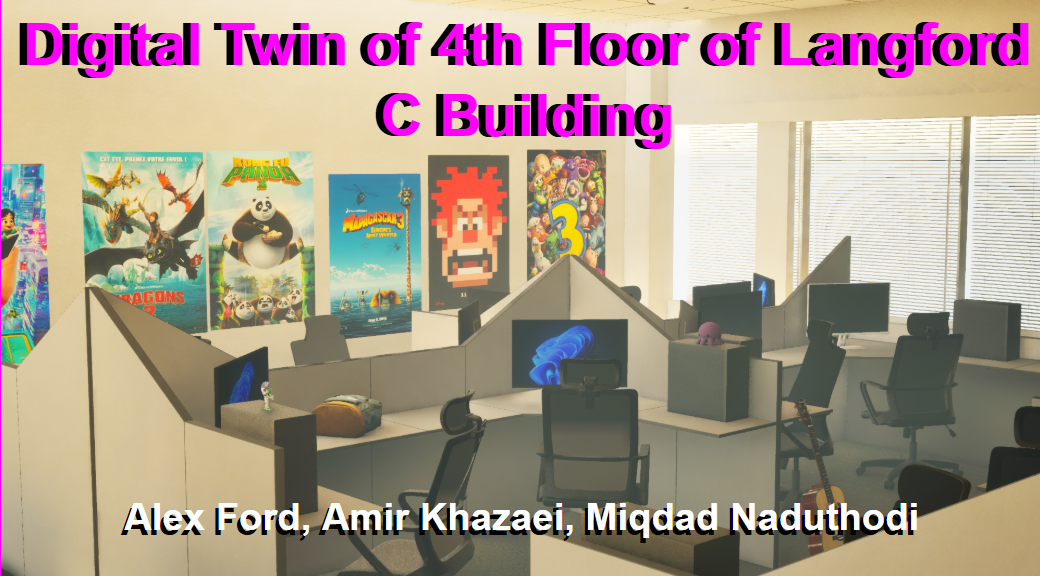
DIGITAL TWIN PROJECT (LANGFORD C BUILDING FOURTH FLOOR)
Made for Digital Twin Class taught by Dr. Jian Tao at Texas A&M University. The project aimed to recreate the 4th floor of the Visualization Department Building and thereby create a Digital Twin that can aid administrator in Crowd Monitoring, Class Scheduling and Student Status updates. By leveraging MQTT, which is a light-weight messaging protocol, messages can be sent from external sensors/devices to the Digital Twin created in Unreal Engine and thereby relay information and updates within the Digital Twin, enabling real-time interaction and visualization in the engine. This was a group project I worked on with Amir Khazaei (Visualization) and Alex Ford (Visualization), both of whom did an incredible job of recreating the rooms and hallways of the 4th floor of the Langford Building. I was primarily responsible and worked on the backend of this project. Here is a link to the final report of the project:
https://drive.google.com/file/d/1oAokkztAOnQmEurv_3DPSIaOjvqxr3uC/view?usp=sharing
REINFORCEMENT LEARNING DEMO (TEACHING AI TO LEARN AND BEAT A GAME)
My first ever project implemented with Unity's ML Agents toolkit, with a focus on Reinforcement learning. For this project, I created and designed a simple obstacle dodging game. The objective is to survive without hitting a falling obstacle as long as possible. An agent was designed, with discrete actions and states, and rewards defined based on how well the agent was able to survive with its each step. While Unity handled basic game implementation and defining actions, states and rewards, Python (PyTorch) was used for the training and the generation of the model. The generated model was then used for inference (test) in Unity, to verify how well the agent was able to learn. Proximal Policy Optimization (PPO) algorithm was used for its versatility and case suitability. The algorithm chooses random actions initially and gradually adapts and learns to perform better actions.
GAME ENGINES FOR VIRTUAL LEARNING SANDBOXES
One of my key research area of interest, is Serious Games. I love exploring game engines to see how they can be utilized for visualizing and learning unintuitive concepts or complex scientific phenomena.
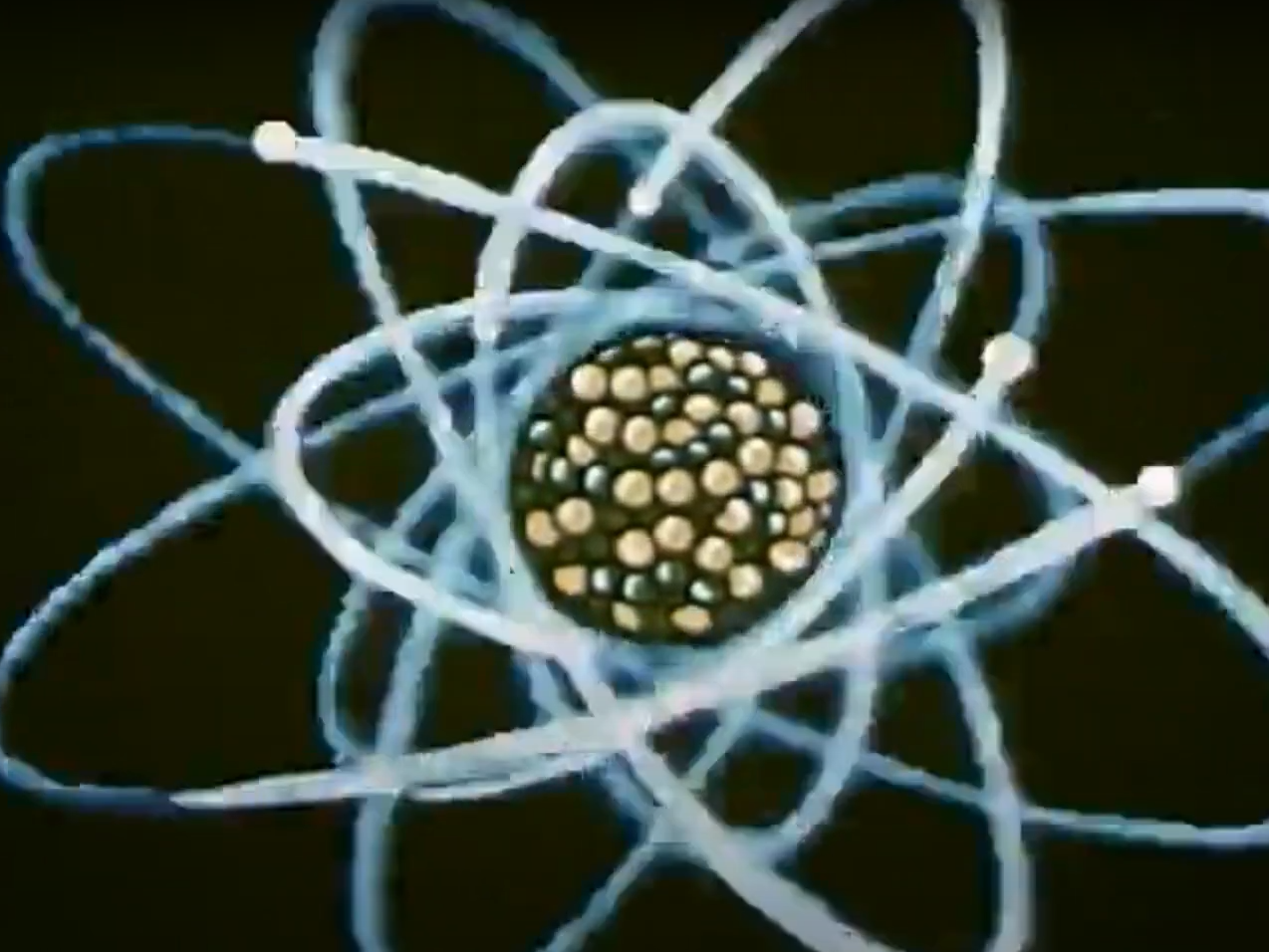
In this short demo, I explored how complex mathematical concepts like Wave function that forms the basis for Quantum Mechanics, can be visualized in real-time with adjustable parameters, for better understanding and experimentation.
The demo features various aspects like Superposition, Quantum states, Probability distributions and so on.
It is clear that there is a huge unexplored potential in leveraging Game engines for visualizing, learning and teaching scientific concepts and phenomena.
INTERACTIVE SPACESHIP ART (DIGITAL IMAGE PROJECT)
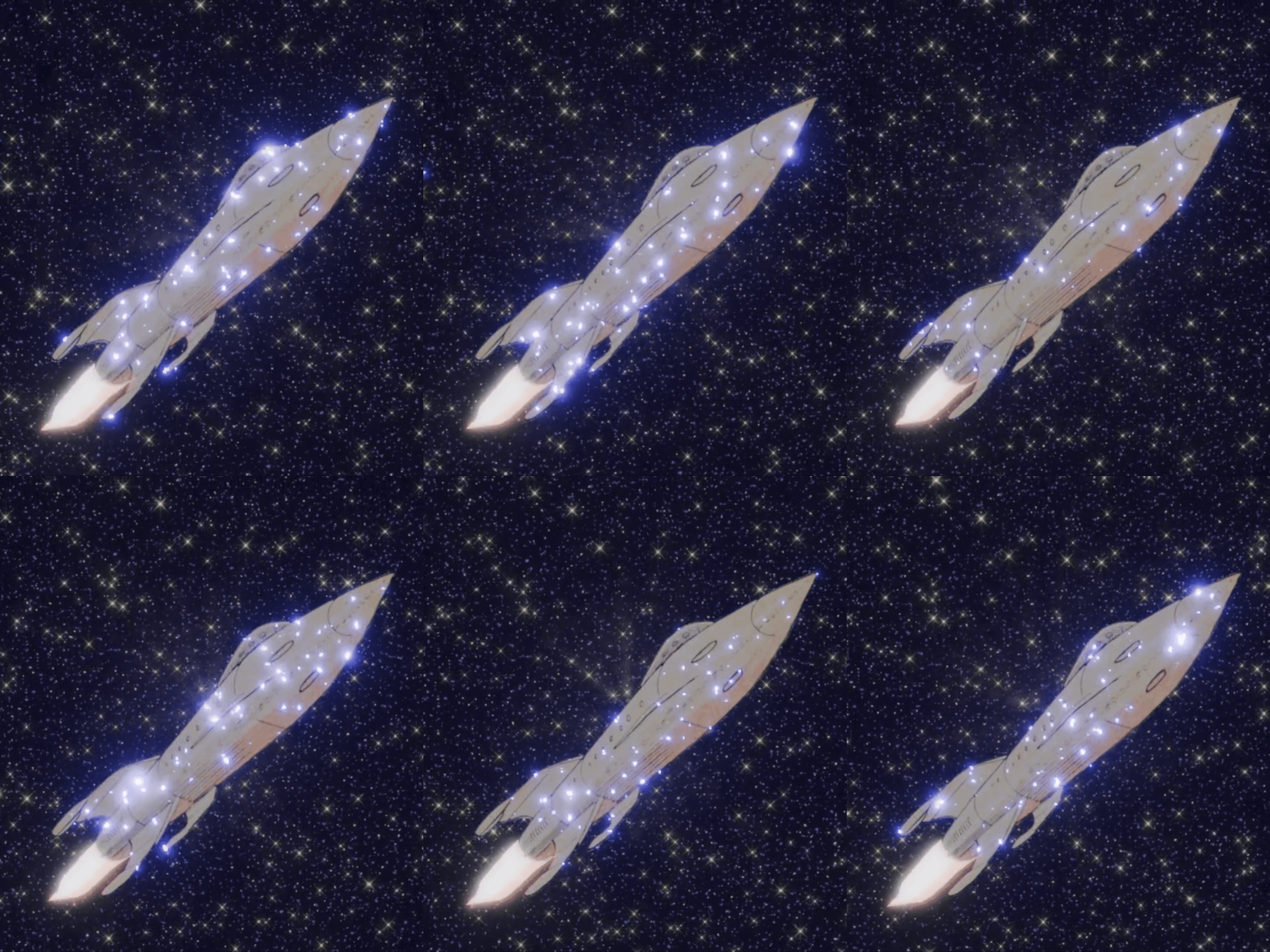
Made for the Digital Image class taught by Dr. Ergun Akleman of Visualization, Texas A&M, in this Group Project, me and my team members worked on creating a spaceship effect, utilizing shadertoy, which is an online platform for creating GLSL shaders, while learning and utilizing core principles of Image processing and analysis. The user can manipulate the reflections on the spaceship surface by moving the mouse cursor to create interesting effects.
Recreating an Ancient Indian Civilization in Unreal Engine
Growing up playing video-games like Assassins' Creed and God of War, that portrayed ancient history and culture, I always wondered why there was a lack of games about India's deep history, rich culture and epic mythologies.
Since I wanted to delve more deep into Unreal and its level-building capabilities, I decided to work on this environmental study based on the Ancient South Indian civilization from the Sangam Era (~100 AD). Since a lot of the information we have from this era are very limited and known mainly through literature, I decided to incorporate my own imagination and envision this project as only a loose representation of the civilization.
This project required deep research into culture, architecture and lifestyles of the people of the Sangam Era and I also had to model most of the assets including buildings, houses, temples, pottery and other structures.
While initially planned as a first-person player experience, due to time constraints, this project was made to be an environmental design project. In the future, I would like to program a player interface that allows user to tour the village and learn more about the culture as they progress.
This was a directed study project with Prof. Hadeel Ramadan from Texas A&M University for my MS Visualization program.
Link to a PPT containing all my research and progress screenshots: https://docs.google.com/presentation/d/1gLdM566L-QzfYwohyK2FHgCCoq0WsNJjFWFNL_0jjq4/edit?usp=sharing